Keep the car efficient, drive smoothly and compare the cheaper station with the extra journey. The price difference matters most when the stop suits your route, fuel grade and expected fill amount.
1. Make your car easier to move
Your engine uses more fuel when the car has to fight avoidable resistance. The quick wins are simple: keep tyres inflated to the pressure listed in your handbook or door sticker, remove unused roof bars, roof racks and roof boxes, and clear weight you do not need for the journey.
Air conditioning is worth using for comfort, demisting and safety, but it still asks the engine to do extra work. Use it when you need it, then switch back to normal ventilation when the cabin is comfortable.
2. Drive smoothly and anticipate traffic
Look well ahead, ease off when traffic slows and accelerate gently when it is safe to do so. Avoiding unnecessary acceleration and braking reduces wasted fuel in stop-start driving.
Choose a safe, legal speed for the road and conditions. The aim is smooth progress, not driving unnecessarily slowly or holding up other road users.
- Look ahead and lift off early when traffic is slowing.
- Accelerate smoothly instead of racing back up to speed.
- Use cruise control only where it keeps the car steady and appropriate for the road.
- Combine short errands when possible, because cold engines and repeated starts can use more fuel.
3. Be a smarter bargain hunter with Route & Fuel
Once the car and driving style are sorted, the final saving is at the pump. Use Route & Fuel to search current petrol and diesel prices by postcode, choose the fuel grade your vehicle uses and check when the station price last changed.
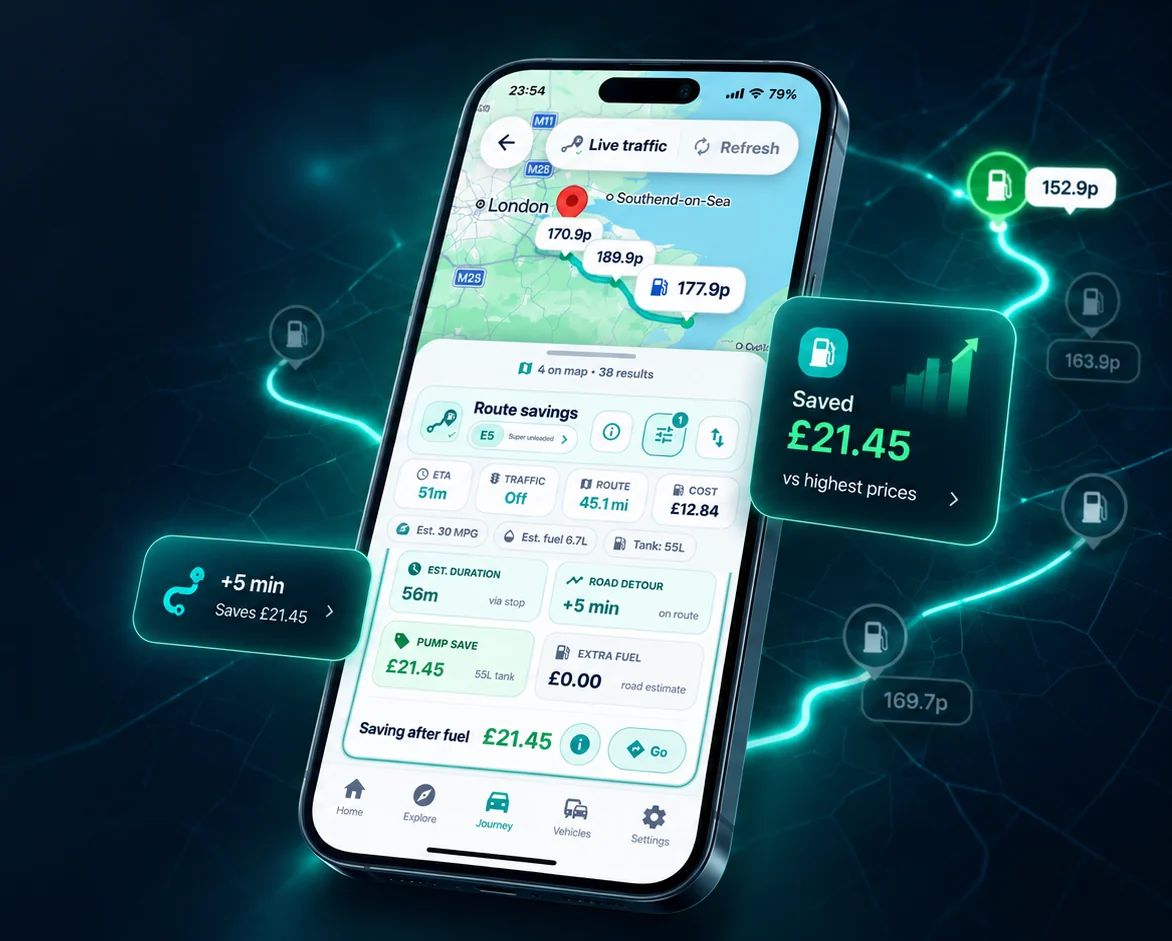
For a 55-litre fill, a station that is 5p per litre cheaper saves £2.75 before the detour. If the extra driving costs 45p in fuel, about £2.30 remains before considering time and convenience. This is an illustrative example; use the litres you actually expect to buy for your own comparison.
Try a real journey in the free fuel route planner. Compare listed station prices using your MPG, fill amount and extra road miles. Keep any value you assign to time separate.
When a cheaper station is worth it
A cheaper stop is most attractive when the price difference is useful, you are buying enough fuel and the station fits your journey. A small top-up, awkward access or a long detour can erase the benefit. Check the listed price against the pump before filling up.
For a step-by-step example, see whether cheaper fuel is worth the detour.
Quick fuel-saving checklist
- Check tyres monthly and before long journeys.
- Remove roof bars, roof boxes and heavy items when you do not need them.
- Use air conditioning sensibly rather than leaving it on by habit.
- Accelerate smoothly and avoid harsh braking.
- Search current local prices before you fill up.
- Check when the price last changed.
- Use Route & Fuel when the cheapest station may involve a detour.
Sources and further reading
- Energy Saving Trust: efficient driving advice
- RAC Foundation: eco-driving and fuel use
- GOV.UK: roof boxes and holiday driving fuel use
- GOV.UK: Fuel Finder for drivers factsheet
Check prices before your next fill-up
Search by postcode or current location on the website and compare stops along your route. The app adds saved vehicles, price alerts, fill-up history and access to cached station information.