97 vs 99 RON petrol: what is the difference?
97 and 99 RON are different octane ratings. Use the minimum rating specified for your vehicle, and distinguish a required rating from a recommendation. E5 is a separate ethanol label, so it does not tell you whether petrol is 97 or 99 RON.
97 and 99 RON compared
Swipe or scroll sideways to see every column on a small screen.
| Check | 97 RON | 99 RON |
|---|---|---|
| Octane rating | 97 | 99 |
| Suitable for your car? | Check the manufacturer’s minimum and recommendations. | Check the manufacturer’s minimum and recommendations. |
| Does the RON number define ethanol content? | No — check the E5/E10 pump label separately. | No — check the E5/E10 pump label separately. |
| How to compare price | Compare the exact product and price time. | Compare the exact product and price time. |
Our Other E5 and 99 RON search groups are inferred from retailer product ranges. Other E5 is not a guarantee of exactly 97 RON at every station.
Higher RON can matter when the engine is built or tuned for it.
RON is an octane rating. Higher RON petrol resists knock better, which matters for some high-performance, high compression or tuned engines. If your owner's manual or tuner specifies 98 or RON 99, do not treat a cheaper lower-RON product as the same thing.
Our Other E5 and 99 RON search groups are inferred from retailer product ranges. Other E5 is not a guarantee of exactly 97 RON at every station.
Do not chase the wrong premium pump.
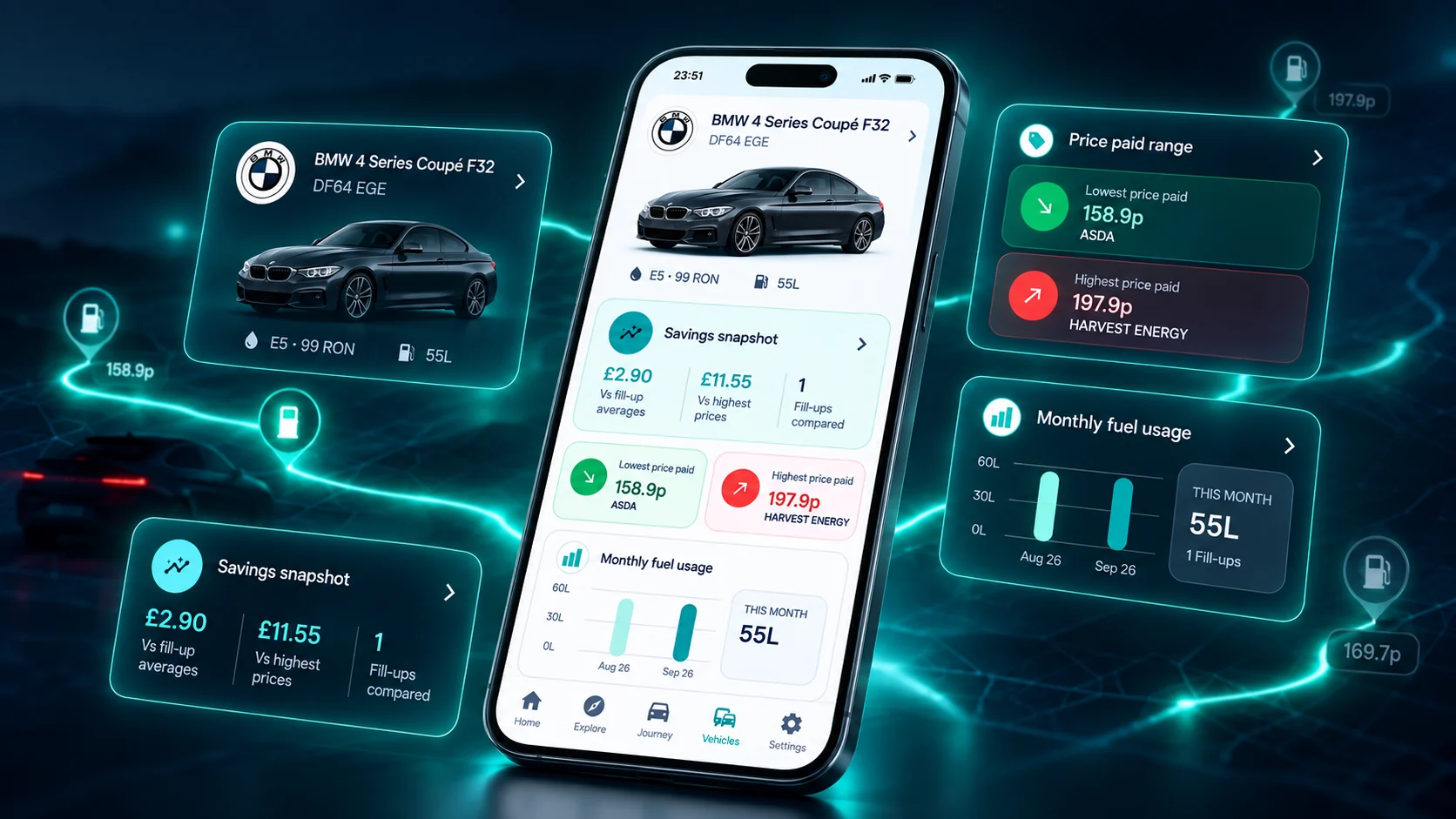
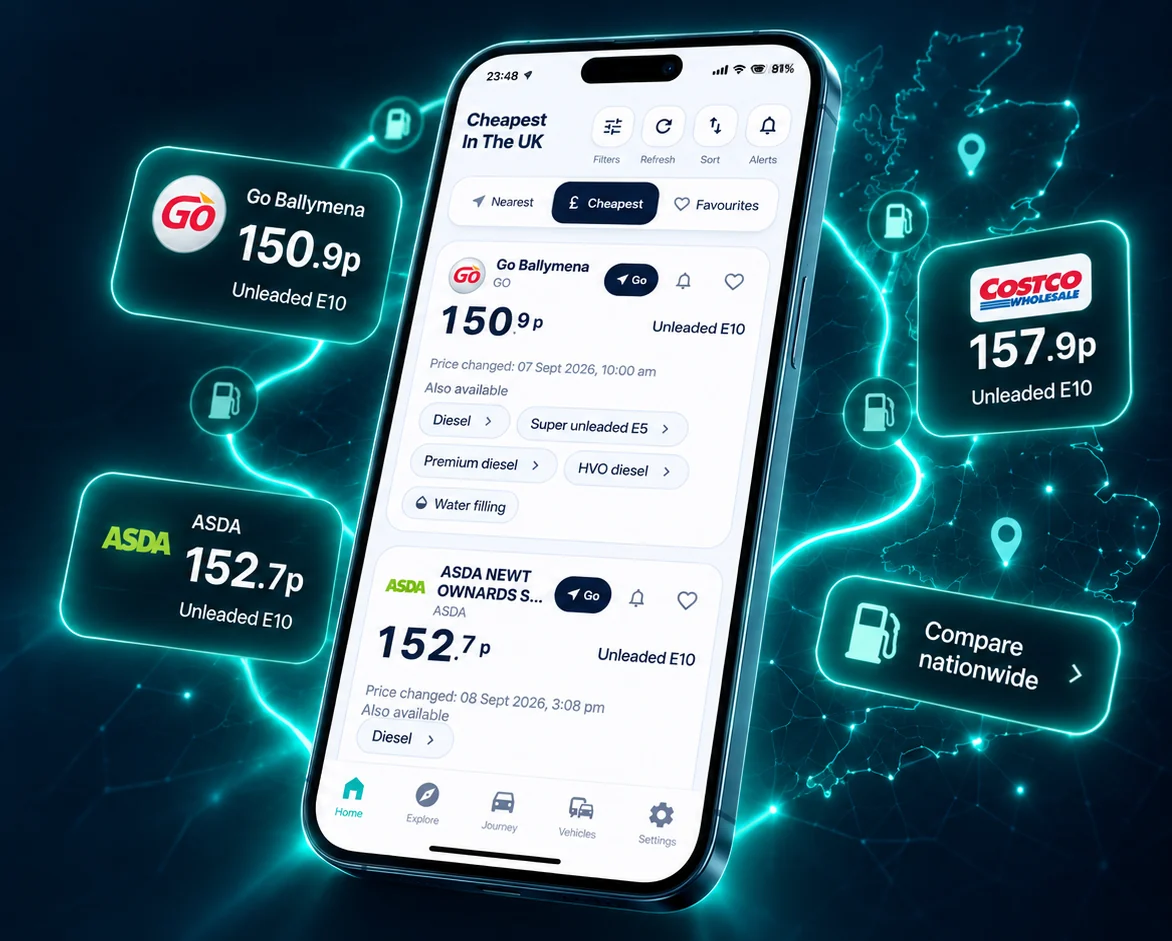
Compare the exact petrol grade first, then use the web route planner to check estimated detour fuel cost and the saving left. The app adds saved vehicle settings and live traffic checks within your plan allowance.